
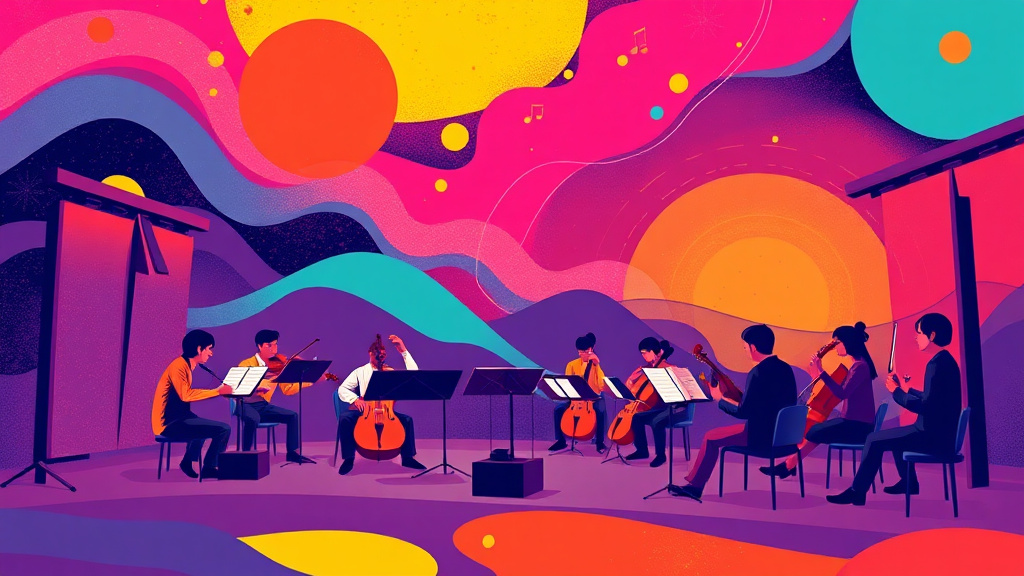
As concert halls sit empty and audiences disperse around the globe, classical musicians face an novel difficulty: how to sustain the splendor and personal connection of orchestral presentation in the digital realm. From remote rehearsals to broadcast performances, composers and conductors are creatively combining traditional methods with modern innovation. This article explores how the classical music world is transforming, discovering that tradition and innovation need not be adversaries—and that the future of orchestral performance may be enhanced by embracing both.
The Development of Online Performance Spaces
The move into digital performance spaces constitutes a core transformation in how classical music connects with audiences worldwide. What started as a provisional response during global lockdowns has grown into a complex ecosystem of streaming platforms, virtual concert halls, and interactive performance environments. Musicians and technologists have partnered to produce immersive experiences that overcome geographical limitations, allowing orchestras to entertain millions in real-time. This digital framework now supports everything from high-definition broadcasts to participatory concerts where audiences can shape musical elements in immediate fashion.
Early digital performances often felt sterile and isolated, lacking the raw power of live orchestral music. However, advances in audio engineering, multi-camera production, and spatial sound technology have significantly enhanced the listening experience. Orchestras now employ sophisticated recording techniques that capture the intricate acoustic characteristics of traditional concert halls while adapting them for digital consumption. Virtual reality platforms enable listeners to enjoy shows from conductor’s perspectives or intimate chamber music settings, creating new dimensions of musical engagement that were previously impossible in traditional venues.
The systems enabling digital performances continues to expand at a swift pace, with dedicated streaming services, academic collaborations, and arts organizations committing significant resources in high-quality output. Musicians have learned to adapt their performance techniques specifically for digital audiences, adjusting dynamics, positioning, and visual presentation to optimize the remote listening experience. This evolution has democratized access to world-class orchestral performances, enabling people in remote areas or with mobility limitations to experience live classical music once accessible only to those living close to significant arts venues.
Technical Challenges and Innovative Approaches
The move into digital performance spaces introduces numerous technical challenges that require creative solution-finding from performers and technical staff alike. Issues ranging from audio quality decline to network disruption jeopardize the integrity of classical performances. However, orchestras worldwide are developing innovative strategies that leverage advanced technology to surmount these barriers, ensuring that digital productions maintain the emotional depth and authenticity that define classical music. These adjustments signify a fundamental change in the way musicians approach their craft.
Latency and Real-Time Synchronization
Latency—the delay between a performer’s execution and its online transfer—poses one of the most significant technological challenges in virtual orchestral performances. Even tiny time lags can compromise the delicate synchronization required for ensemble playing, where exact synchronization is critical. Musicians accustomed to working with others in shared venues must now modify their approach to manage online latency issues. Conductors employ visual timing guides and beat indicators delivered through personal screens, allowing artists to preserve unity despite geographical separation and technical limitations.
Cutting-edge network systems has become instrumental in reducing latency problems during live streamed performances. High-bandwidth connections, specialized fiber connections, and advanced transmission standards enable near-instantaneous audio transmission. Many musical ensembles now employ backup network infrastructure that automatically switch to backup connections if main connections fail. Recording studios featuring professional-grade equipment document performances with minimal compression, maintaining subtle tonal qualities that distinguish classical compositions. These technological investments ensure that streamed concerts match live venue quality.
- High-speed fiber connections reduce transmission delays significantly
- Individual monitor systems deliver coordinated audio and visual cues
- Backup connectivity pathways guarantee continuous operational stability
- Professional-grade audio equipment preserves dynamic range and clarity
- Real-time synchronization software compensates for network fluctuations automatically
Musicians have developed tailored approaches specifically designed for digital environments, preparing thoroughly to execute using online monitoring tools. Training now feature specialized practice practicing with latency testing tools, allowing performers to internalize timing adjustments before real-time shows. Leaders give supplementary visual guidance through synchronized video feeds, establishing a cohesive artistic presentation despite physical distance. These innovative approaches illustrate the classical music community’s commitment to upholding artistic standards while incorporating technological progress.
Reconsidering Audio Fundamentals in Digital Spaces
The transition to digital concert platforms has compelled musicians to fundamentally reconsider how sound moves and resonates. Traditional classical hall acoustics are based on physical venue design, where audio frequencies rebound off specific surfaces to produce organic reverberation and richness. In online settings, these acoustic foundations need fundamental reconstruction. Musicians now work alongside audio professionals and acousticians to digitally simulate concert hall characteristics, using advanced technology to replicate the acoustic qualities of renowned performance spaces. This digital evolution ensures that online performances maintain the full, immersive sound audiences anticipate from traditional classical compositions.
Sophisticated spatial audio systems has become a game-changer for virtual orchestral performances. Methods such as binaural recording and Ambisonics produce immersive audio environments that engage audiences in the performance, regardless of their physical location. Musicians must adjust their performance methods to account for how mics record and deliver audio differently than human ears in a live venue. Conductors now work with audio engineers to balance distinct instrumental sections, maintaining clarity and cohesion across online formats. This collaborative approach reveals how classical musicianship and contemporary technology can enhance rather than reduce the orchestral experience.
Looking ahead, musicians understand that virtual performance spaces provide unexpected artistic opportunities. The potential to manipulate acoustic spaces enables composers to explore with completely novel sonic dimensions previously impossible in physical halls. Some orchestras intentionally leverage the distinctive qualities of digital sound, producing performances purposefully crafted for streaming platforms. This evolution demonstrates that classical music’s future extends beyond simply reproducing traditional conventional concerts, but in carefully applying acoustic fundamentals to create captivating shows that respect musical conventions while adopting technological innovation.
